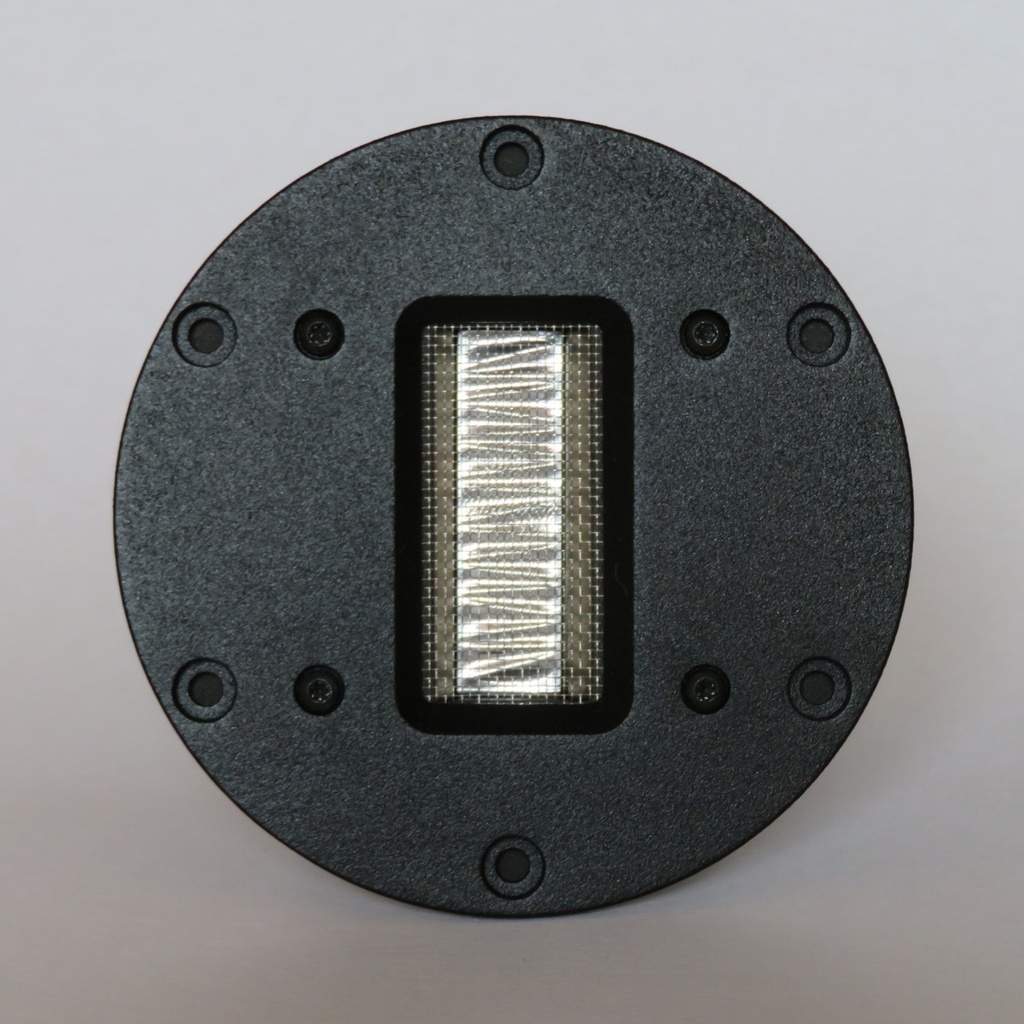
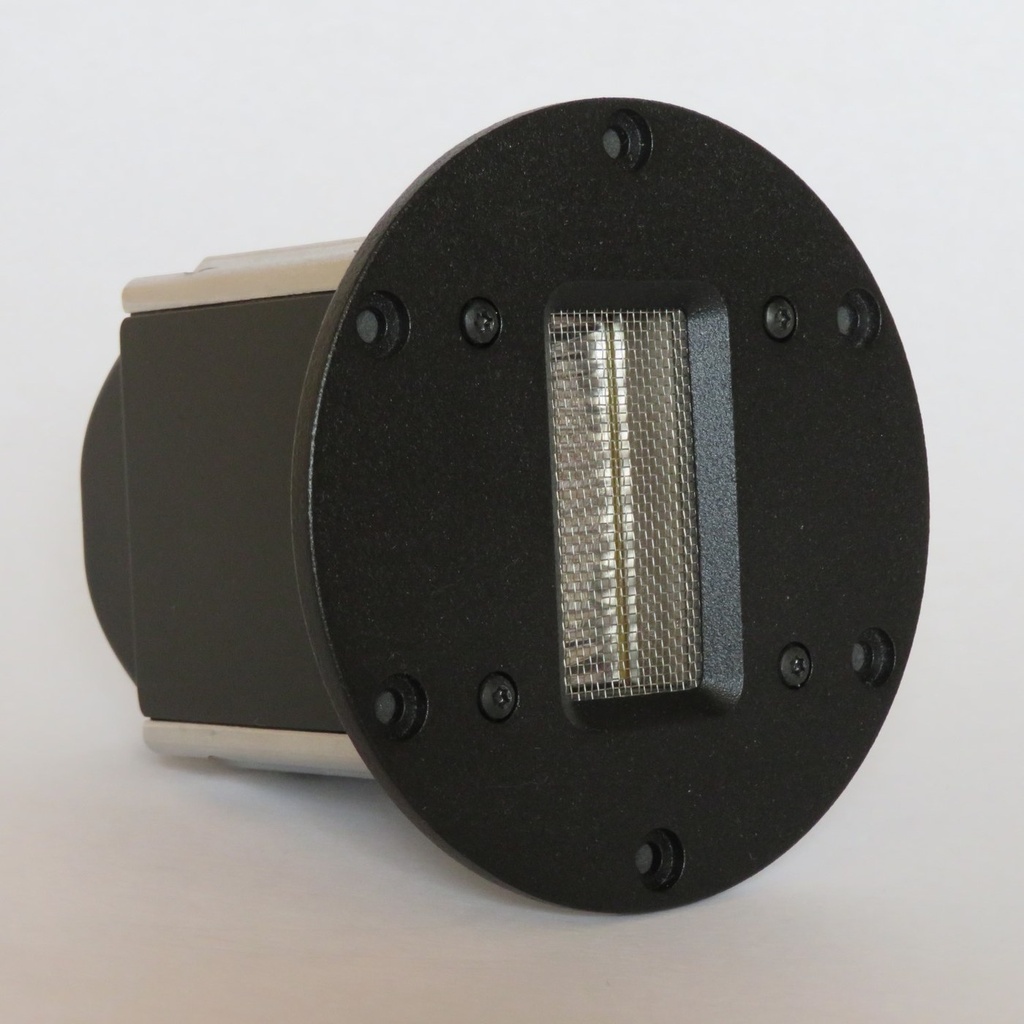
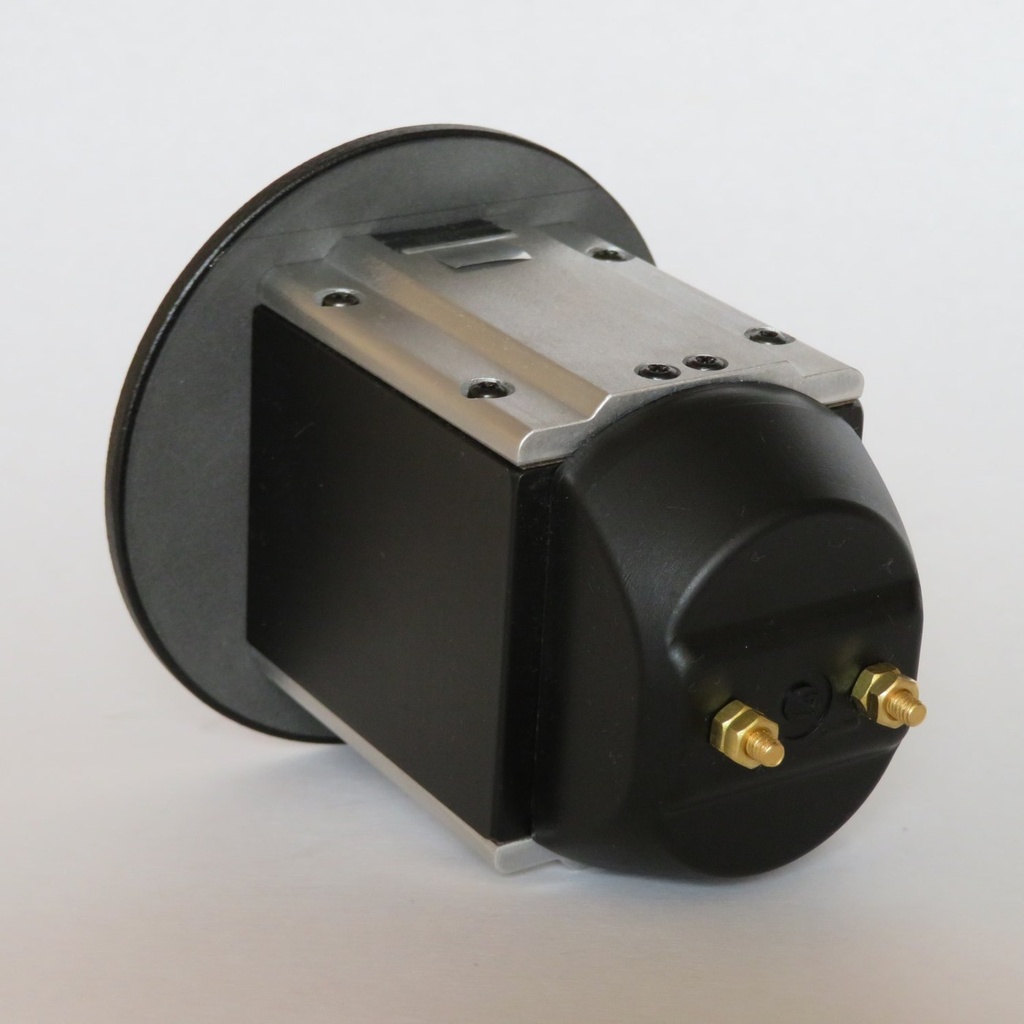
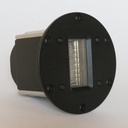
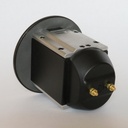
VIAWAVE SRT-7
VIAWAVE SRT-7 — Ribbon Tweeter · Ribbon / Planar Magnetic
95 dB - 8 Ohm - 1,800 – 30,000 Hz - 17 W RMS
Part no.: 42A-CHS-BT-VIA-0001
Documents
VIAWAVE SRT-7 — Ribbon tweeter
Modernised version of the GRT-145-8 with less roll-off at the lower end of the range.
95 dB sensitivity · 8 Ω · Frequency range 1.800 – 30.000 Hz
What the SRT technology does
In a classic ribbon tweeter the air gap between ribbon foil and magnet poles is open. Viawave seals it with a U-shaped, heat-resistant polymer film — the patented SRT technology (Sealed Ribbon Tweeter). Two things follow: distortion at the lower end of the range drops markedly, and sensitivity rises by 2 to 3 dB. For a ribbon with only 7 cm² of diaphragm area, 95 dB is an unusual figure.
Technical data
| Nominal impedance | 8 Ω |
|---|---|
| Recommended frequency range | 1.800 – 30.000 Hz |
| Sensitivity (2,83 V / 1 m, 4 – 18 kHz) | 95 dB |
| Power handling, RMS | 17 W |
| Power handling, peak | 40 W |
| Programme power (high-pass 3.000 Hz, 12 dB/oct.) | 150 W |
| Rear chamber resonance | 800 Hz |
| Ribbon dimensions | 14 × 50 × 0.009 mm |
| Ribbon area | 7 cm² |
| Ribbon mass | 0,018 g |
| DC resistance Re | 0,06 Ω |
| Inductance (low frequency) | 7 mH |
| Inductance (high frequency) | 0,034 mH |
| Flux density in the gap | 0,65 T |
| Net weight | 1,32 kg |
Materials
| Ribbon | Aluminium |
|---|---|
| Front plate | Aluminium |
| Magnets | NdFeB |
| Magnetic circuit | Low-carbon steel |
| Rear chamber | Natural wool |
Use
Der Hersteller gibt einen Hochpass ab 3.000 Hz mit 12 dB/Oktave an. Tiefer trennen geht, verlangt aber eine steilere Flanke. Die Belastbarkeitsangabe von 150 W gilt ausdrücklich nur mit dieser Weiche — ohne Hochpass ist ein Bändchen sofort zerstört.
The manufacturer's datasheet with frequency response, impedance and distortion measurements is available for download above. Part no.: 42A-CHS-BT-VIA-0001
Viawave SRT-7: modernised sealed ribbon tweeter with 95 dB at 8 Ω and more headroom at the bottom
The Viawave SRT-7 is the revised version of the GRT-145-8. The key figures are the same – 95 dB at 2.83 V/1 m (4 to 18 kHz), 8 Ω, operating range 1,800 to 30,000 Hz – but the roll-off at the lower end of the range is smaller. One clue sits in the rear chamber: on the SRT-7 its resonance lies at 800 Hz instead of 900 Hz, so the ribbon gets a little more room at the bottom.
SRT stands for Sealed Ribbon Tweeter, the patented technique in which the air gap between aluminium foil and magnet poles is sealed with a U-shaped, heat-resistant polymer film. The sealed gap lowers distortion at the bottom of the operating range and raises sensitivity by 2 to 3 dB – for 7 cm² of ribbon area, 95 dB is correspondingly high. Foil 14 × 50 × 0.009 mm, 0.018 g, NdFeB magnets with 0.65 T in the gap, aluminium faceplate, rear chamber with natural wool, 1.32 kg.
Use and enclosure
For the crossover the manufacturer's spec of 3,000 Hz at 12 dB/octave applies; with that filter, 150 W program is permitted. The smaller roll-off at the bottom makes the SRT-7 a candidate when the midrange gives up early at its top end and you want to get closer to 1,800 Hz – then with a steeper slope, because 17 W RMS and 40 W peak set the limit, not the program figure. Without a high-pass the ribbon is destroyed instantly; that also applies to quick tests on the amplifier.
The 8 Ω nominal impedance is generated by the transformer; the ribbon itself has 0.06 Ω. For the passive crossover, work with 7 mH low-frequency and 0.034 mH high-frequency inductance, or better still with the measured impedance curve. Dispersion: wide horizontally, narrow vertically because of the 50 mm ribbon height – mount at ear level with a short distance to the midrange.
What to look out for
- 8 Ω nominal – benign load for passive crossovers and valve amplifiers
- Rear chamber resonance 800 Hz – a little more headroom at the bottom than the GRT-145-8
- High-pass 3,000 Hz, 12 dB/oct as spec – 150 W program only with it
- 17 W RMS / 40 W peak, 1.32 kg, aluminium faceplate
Frequently asked questions
How does the SRT-7 differ from the GRT-145-8?
Same key figures, same SRT technique, but less roll-off at the lower end of the range and a chamber resonance at 800 Hz instead of 900 Hz. For a new project the SRT-7 is the current choice; if you are completing a GRT-145-8 pair, stay with the original.
What amplifier does the SRT-7 need?
At 95 dB and 8 Ω, almost any. Power is not the issue, the high-pass in the crossover is; an amplifier that behaves cleanly into 8 Ω – solid-state or valve – will do.
Which designs is the SRT-7 intended for?
Two- and three-way speakers with a midrange that plays cleanly above 3,000 Hz, and DSP-based active speakers where you can choose a steep slope and move closer to 1,800 Hz.
Viawave SRT-7: manufacturer, spellings and classification
Viawave (Viawave Audio) is the maker of the patented SRT ribbon tweeters with sealed air gap. The SRT-7 is a ribbon tweeter, available from 42.audio, Viawave dealer in Germany, with datasheet and full specifications in the driver database.
At 42.audio you get the VIAWAVE SRT-7 with all key data in the driver database. More drivers from this manufacturer: Atlas Viawave.
Specifications
| Allgemein | |
|---|---|
| Manufacturer | VIAWAVE |
| Category | Ribbon Tweeter |
| Series | SRT |
| Impedance (Ω) | 8 |
| Power handling (W) | 17 |
| Sensitivity (dB) | 95 |
| Frequency from (Hz) | 1800 |
| Frequency to (Hz) | 30000 |
| Abmessungen & Korb | |
|---|---|
| Weight (kg) | 1.32 |