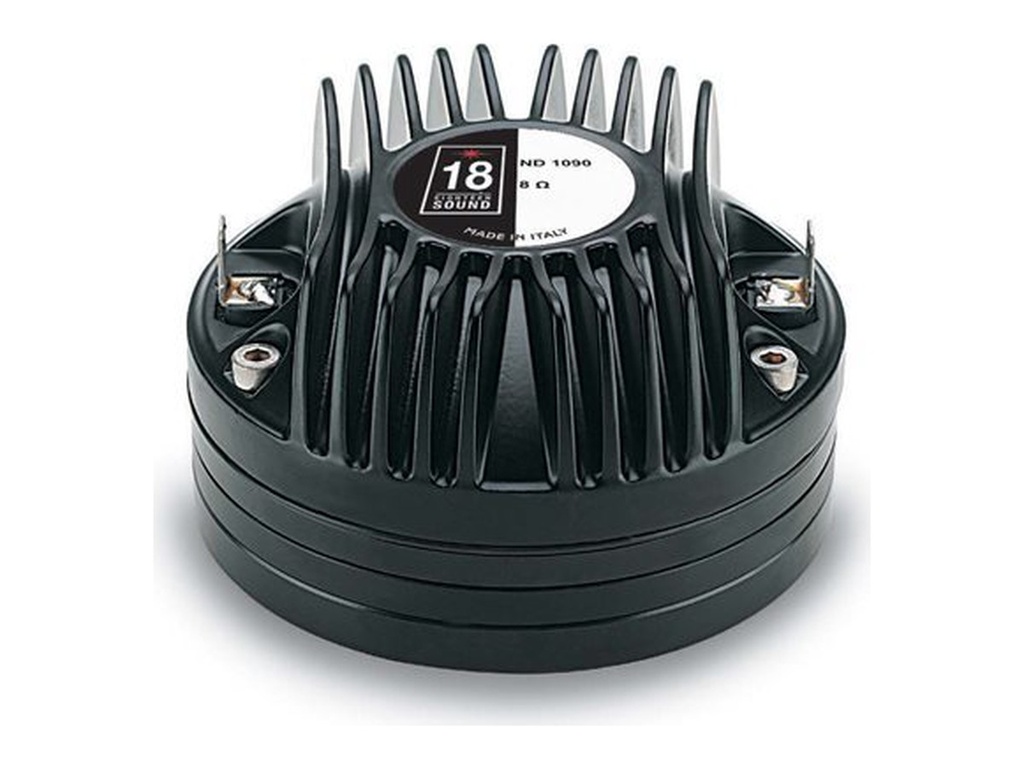
18SOUND ND1090
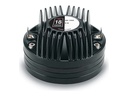
18SOUND (Eighteen Sound) ND1090 — 1" / 1 inch Compression Driver · Tweeter / HF Driver · Neodymium · Titanium Dome
1.75" voice coil · 16 Ω
Part no.: 42A-CHS-KD-18S-0042
Documents
18SOUND ND1090 — Compression Driver
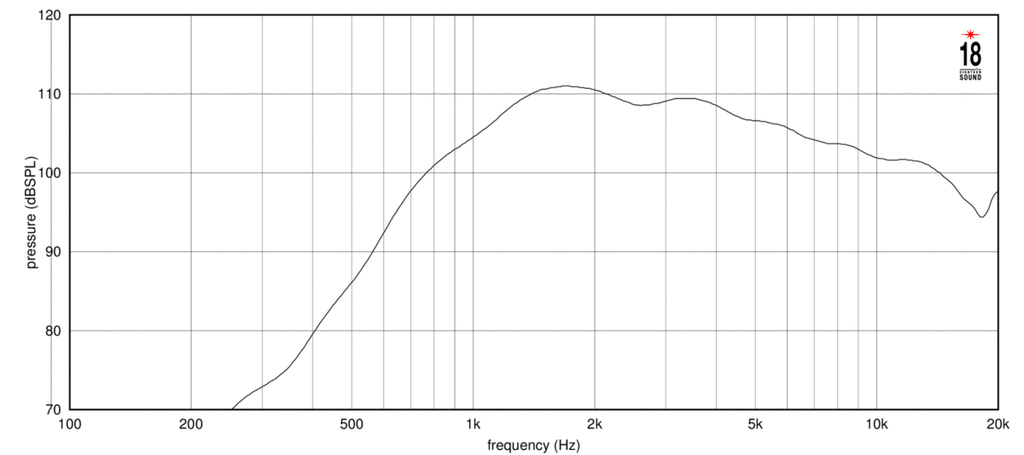
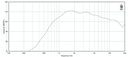
50 W AES · 110 dB Sensitivity · Frequency range 1600 Hz – 20000 Hz
Technical data
- Diameter: 1 "
- Voice coil: 1.75 "
- Power handling: 50 W AES
- Sensitivity: 110 dB
- Impedance: 16 Ω
- Weight: 1.1 kg
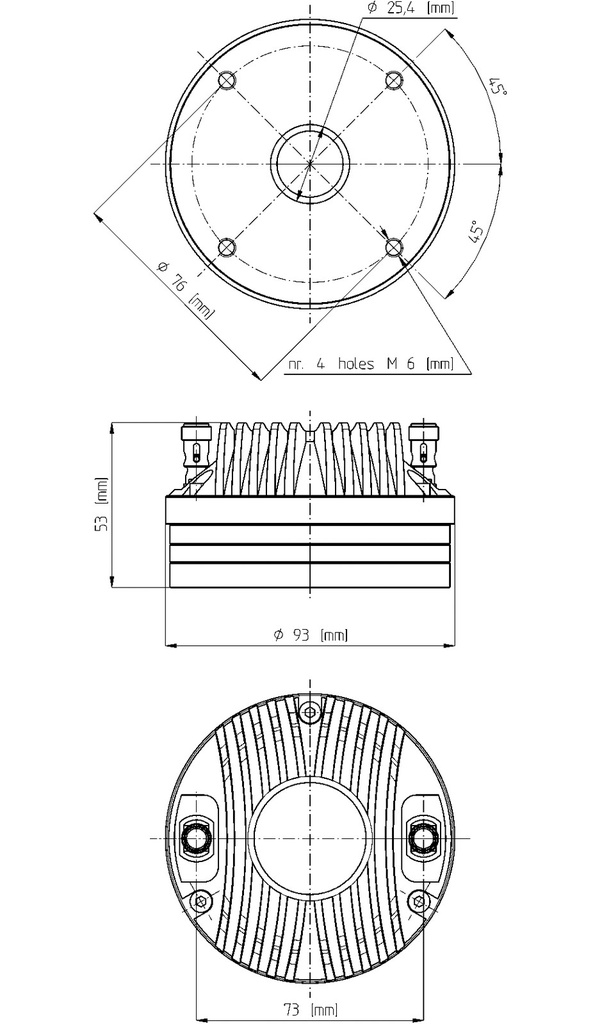
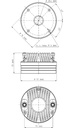
- Mounting depth: 53 mm
- Frequency range: 1600 – 20000 Hz
- Cone material: Titanium - Pen
- Exit: 25 mm (1.0 in)
- Rec. crossover: 1.6 kHz
Datasheet (PDF) · Manufacturer page
Series: ND · Part no.: 42A-CHS-KD-18S-0042
18Sound ND1090: 1" neodymium driver with 110 dB and 16 Ω for passive crossovers and arrays
The 18Sound ND1090 is the 16 Ω version of a 1" compression driver that also exists in 8 Ω. Neodymium magnet, 1.75" voice coil and titanium dome yield 110 dB sensitivity at 50 W AES; the operating range runs from 1.6 kHz to 20,000 Hz. At 1.1 kg and 53 mm mounting depth it is as compact as you would expect from the ND range.
Why 16 Ω? At the same amplifier voltage the driver draws only half the power of an 8 Ω model. In passive two-way boxes that is an advantage, because the level difference to the woofer shrinks and the attenuation network has to burn correspondingly less energy. Two ND1090 in parallel also give exactly 8 Ω – for dual-driver arrangements in line sources or arrays that should hang on a standard amplifier channel, this is the clean solution without transformers.
Use and enclosure
The 25 mm throat exit fits all 1" horns and waveguides from 18Sound that 42.audio lists in the Horns & Waveguides category. For tops with a passive crossover, choose a horn that controls coverage down to the crossover region; above it, the titanium dome delivers a clear, extended top end.
1.6 kHz is the recommended lower crossover frequency. In passive designs the high-pass is dimensioned differently because of the higher impedance – calculate the component values for 16 Ω, not for 8 Ω. For continuous operation at high levels the usual compression-driver rules apply: crossover preferably above the recommendation, steep slope, and a limiter in the HF channel when driven actively. The 50 W AES refer to the 1.75" coil and, at 16 Ω, are rarely exhausted on many amplifiers anyway.
What to look out for
- 16 Ω: half the power draw compared with 8 Ω at the same voltage – check amplifier headroom.
- Two drivers in parallel = 8 Ω: suits dual arrangements on one channel.
- 110 dB, 50 W AES, titanium dome on a 1.75" coil: crossover from 1.6 kHz.
- 1.1 kg and 53 mm mounting depth: compact neodymium motor.
Frequently asked questions
Is a 16 Ω driver quieter than the 8 Ω version?
On the same amplifier at the same voltage yes, because only half the power flows. In practice a DSP or the crossover compensates for the difference, and with 110 dB sensitivity there is plenty of level in reserve anyway.
Which crossover components do I need?
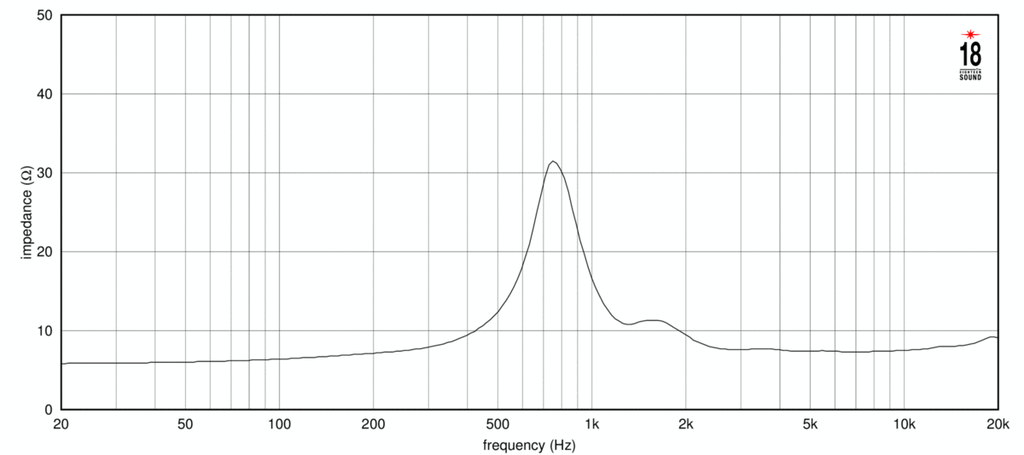
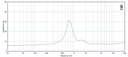
Calculate the high-pass for 16 Ω. Capacitors come out smaller and inductors larger than at 8 Ω. The impedance curve from the datasheet PDF at 42.audio helps to place the filter cleanly above 1.6 kHz.
Which cabinets is the ND1090 intended for?
Two-way tops, monitors and line arrangements in which two drivers run in parallel. The 1" interface with 25 mm exit fits the horns and waveguides from 18Sound; the driver database at 42.audio lists all values.
At 42.audio you get the 18SOUND ND1090 with datasheet PDF, all key data in the driver database. More drivers from this manufacturer: Atlas 18Sound.
Specifications
| Allgemein | |
|---|---|
| Manufacturer | 18SOUND |
| Category | Compression Driver |
| Series | ND |
| Impedance (Ω) | 16 |
| Power handling (W) | 50 |
| Sensitivity (dB) | 110 |
| Frequency from (Hz) | 1600 |
| Frequency to (Hz) | 20000 |
| Abmessungen & Korb | |
|---|---|
| Diameter | 1 |
| Voice coil (inch) | 1.75 |
| Mounting depth (mm) | 53 |
| Weight (kg) | 1.1 |