18SOUND ND3G
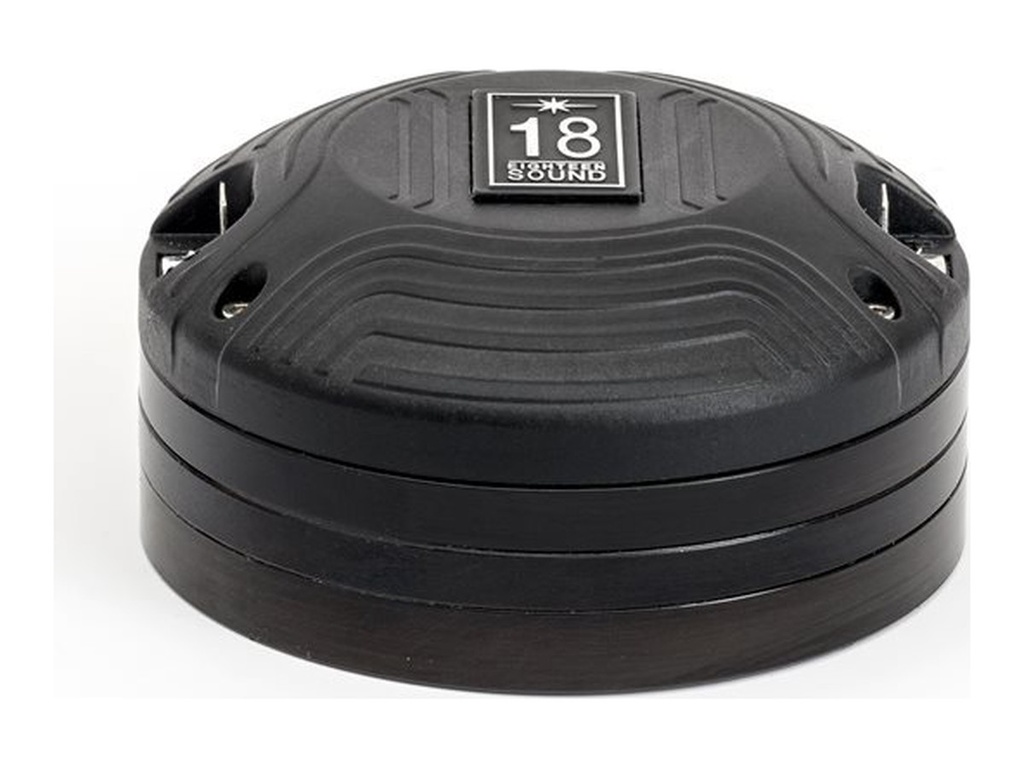
18SOUND (Eighteen Sound) ND3G — 1.4" / 1.4 inch Compression Driver · Tweeter / HF Driver · Neodymium · Glass Dome
3" voice coil · 8 Ω
Part no.: 42A-CHS-KD-18S-0014
Documents
18SOUND ND3G — Compression Driver
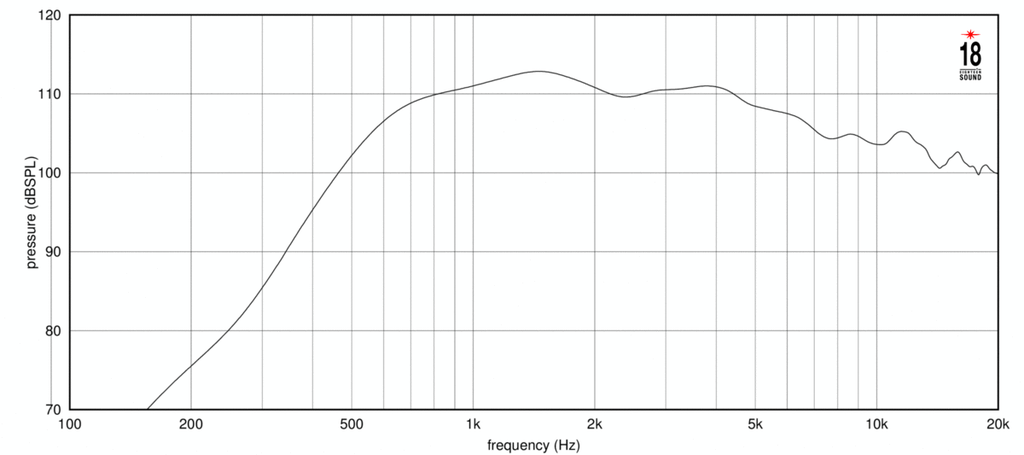
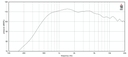
110 W AES · 112 dB Sensitivity · Frequency range 800 Hz – 20000 Hz
Technical data
- Diameter: 1.4 "
- Voice coil: 3 "
- Power handling: 110 W AES
- Sensitivity: 112 dB
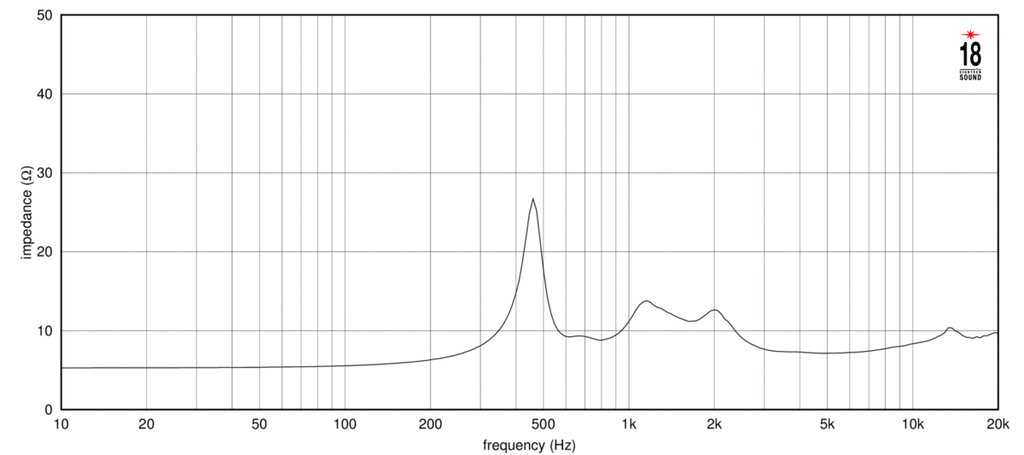
- Impedance: 8 Ω
- Magnet: Neodymium
- Weight: 1.65 kg
- Mounting depth: 53 mm
- Frequency range: 800 – 20000 Hz
- Cone material: Glass
- Exit: 36 mm (1.4 in)
- Rec. crossover: 1.2 kHz
Datasheet (PDF) · Manufacturer page
Series: ND · Part no.: 42A-CHS-KD-18S-0014
18Sound ND3G: 1.4" compression driver with glass diaphragm and 3" voice coil
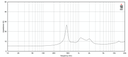
Glass as a diaphragm material is unusual in compression drivers, and that is exactly what makes the ND3G interesting. 18Sound (Eighteen Sound) builds it as a 1.4" driver in the ND neodymium series with a glass dome on a 3" voice coil. Glass combines high stiffness with an internal damping that metal diaphragms lack: break-up modes are not only pushed upwards, their Q is damped as well. The result is a treble response without the narrow resonance peaks titanium can show at the very top.
The core data are at series level: 112 dB sensitivity, 110 W AES, working range from 800 Hz to 20,000 Hz, 8 Ω nominal impedance, 36 mm exit, 53 mm depth and 1.65 kg. That makes the ND3G the light version – the heavier sibling with the larger motor is called ND3SG.
Use and enclosure
The ND3G suits applications where tonal colour and neutrality matter: studio monitors with horn-loaded treble, high-quality installation cabinets, home cinema and hi-fi horn systems, theatre. With its 1.4" flange it takes the 18Sound horns XT1464, XR1464C, XR1496C, PR614, H860 3D Print and the XG14 Alu waveguide; for living rooms and monitoring a waveguide with even coverage is usually the better choice than a long-throw PA horn.
The recommended crossover frequency is 1.2 kHz, the lower limit 800 Hz. In a three-way system with a dedicated midrange you can happily cross higher still; the glass diaphragm then works far from its maximum excursion and distortion drops further. High-pass at least 12 dB/octave, better 24 dB/octave, and a series capacitor for protection in a passive network.
What to look out for
- 8 Ω – uncritical on any amplifier; at 112 dB a small channel is plenty.
- Glass diaphragm: mechanically more brittle than titanium – never press on the dome during installation or removal.
- 1.4" exit (36 mm) – horns and waveguides with a 1.4" throat only.
- 1.65 kg, 53 mm depth – also suitable for compact enclosures and monitor formats.
Frequently asked questions
What separates the ND3G from the ND3T?
Same series, same motor, same 3" coil and 1.4" exit. The ND3T carries a titanium diaphragm, the ND3G a glass one. Titanium is the rugged PA choice, glass the better-damped alternative for neutral reproduction – both are rated at 110 W AES.
Isn't glass too delicate for PA?
Once installed, the dome is protected by phase plug and horn and is only loaded acoustically. The real risks are electrical: signals below 800 Hz, switch-on transients and missing limiters. Take care of those and the ND3G runs continuously without trouble.
Which horn for a studio or living room?
A waveguide with even directivity, at 18Sound the XG14 Alu. It keeps coverage constant across frequency, which matters more for stable stereo imaging than maximum throw. For large rooms or stages go for the XR1496C or XT1464.
At 42.audio you get the 18SOUND ND3G with datasheet PDF, all key data in the driver database. More drivers from this manufacturer: Atlas 18Sound.
Specifications
| Allgemein | |
|---|---|
| Manufacturer | 18SOUND |
| Category | Compression Driver |
| Series | ND |
| Magnet | Neodymium |
| Impedance (Ω) | 8 |
| Power handling (W) | 110 |
| Sensitivity (dB) | 112 |
| Frequency from (Hz) | 800 |
| Frequency to (Hz) | 20000 |
| Abmessungen & Korb | |
|---|---|
| Diameter | 1.4 |
| Voice coil (inch) | 3 |
| Mounting depth (mm) | 53 |
| Weight (kg) | 1.65 |