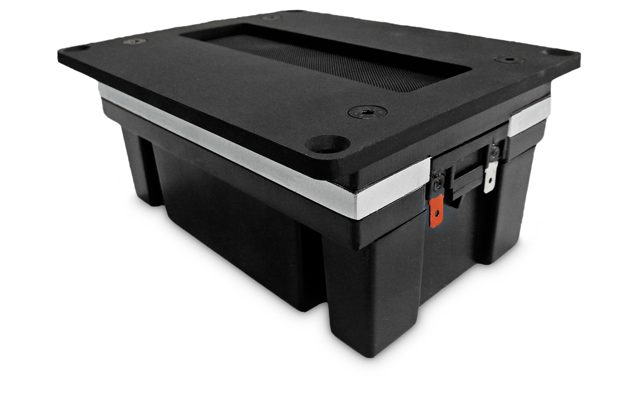
BEYMA TPL-200/B
BEYMA TPL-200/B — AMT Driver
120 W AES - 101 dB - 1000 – 23000 Hz
Part no.: 42A-CHS-AT-BEY-0002
Documents
BEYMA TPL-200/B — AMT-Treiber
120 W AES · 101 dB Sensitivity · Frequency range 1000 Hz – 23000 Hz
Technical data
- Power handling: 120 W AES
- Sensitivity: 101 dB
- Frequency range: 1000 – 23000 Hz
Series: TPL · Part no.: 42A-CHS-AT-BEY-0002
Beyma TPL-200/B: large AMT driver with 120 W AES and 101 dB without a horn
120 W AES power handling is a high figure for an air-motion transformer, and that is exactly what the Beyma TPL-200/B is built for. It is the large model of the TPL series in the version without a horn: 101 dB sensitivity, working range from 1,000 Hz to 23,000 Hz. The high power handling comes from the large diaphragm area. More folds mean more conductor length, more surface for heat dissipation and less excursion per fold for the same sound pressure.
This also explains why a large AMT stays cleaner at high level than a small one: the foil has to travel less for the same output, and the drive force is spread across the whole membrane. At the same time the moving mass stays low, because the foil is thin and there is no voice coil with a former to move along. Without a horn the TPL-200/B radiates wide horizontally, which makes it attractive wherever a horn would narrow the coverage too much.
Use and enclosure
The TPL-200/B fits two-way tops with robust mid-woofers, studio main monitors and large hi-fi systems that should manage high levels without a compression driver. Cross it well above 1,000 Hz; with a low crossover and reinforcement levels, a 24 dB/oct. high-pass is appropriate, otherwise 12 dB/oct. will do. The 120 W AES rating assumes filtered signal and is no invitation to full-range operation.
Mount the driver upright, because the diaphragm height narrows vertical dispersion and keeps floor and ceiling reflections small, while horizontal coverage stays wide. 101 dB sensitivity calls for a voltage divider against most woofers in passive networks; in active systems, set the level in the DSP and put a limiter in front. Beyma waveguides and horns are listed at 42.audio under Horns & Waveguides, and the TPL models can be compared in the driver database.
What to look out for
- 120 W AES: high power handling, valid for filtered signal above the crossover.
- 101 dB sensitivity: plan for level matching to the woofer.
- Cross well above 1,000 Hz, use 24 dB/oct. at high levels.
- No horn: wide horizontal dispersion, mount upright.
Frequently asked questions
What is the difference between the TPL-200/B and the TPL-200/H?
The /H has a horn in front that raises sensitivity and narrows dispersion. The /B runs without a horn, delivers 101 dB and radiates wider horizontally. Power handling and bandwidth are identical: 120 W AES and 1,000 to 23,000 Hz.
Is the TPL-200/B suitable for PA use?
Yes, with 120 W AES and 101 dB it is designed for medium-sized tops. What matters is a crossover well above 1,000 Hz with a steep high-pass and a limiter, so no low-frequency content overloads the foil.
Which amplifier suits the TPL-200/B?
A stable amplifier with a clean high-pass in front; at 101 dB control matters more than power. For reinforcement, a channel with limiter functionality is sensible; for hi-fi, any low-noise power amp will do.
At 42.audio you get the BEYMA TPL-200/B with all key data in the driver database. More drivers from this manufacturer: Atlas Beyma.
Specifications
| Manufacturer | BEYMA |
| Category | AMT Tweeter |
| Series | TPL |
| Power handling (W) | 120 |
| Sensitivity (dB) | 101 |
| Frequency from (Hz) | 1000 |
| Frequency to (Hz) | 23000 |